Date Published: 2025/12/22
Read Time: mins
Does your home have too low or too high humidity in winter?
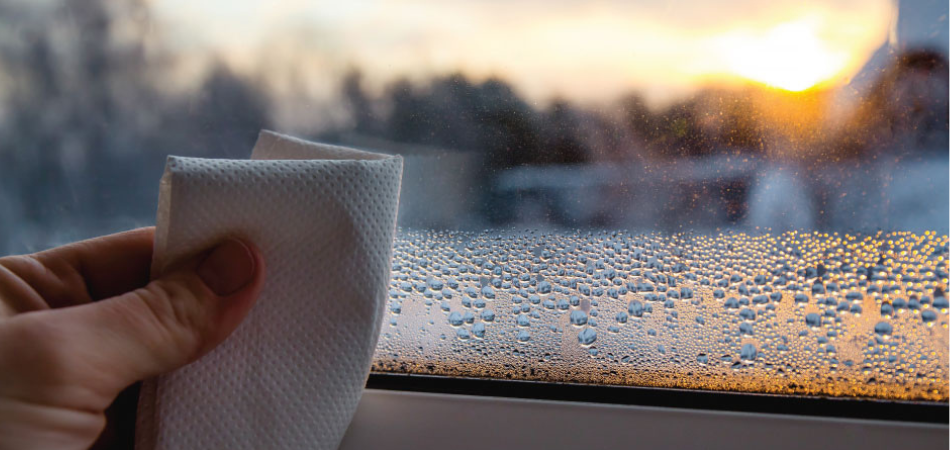
To avoid respiratory discomfort caused by dry air or prevent condensation on windows due to excess humidity, it’s recommended to keep the humidity level around 30% during the cold season. But how do you find the right balance?
Air that’s too dry can cause irritation of the nose and throat. Conversely, excessive humidity not only leads to condensation but also increases the risk of mold and symptoms such as coughing, nasal discharge, or wheezing. It can even worsen asthma attacks.
The basics
- Measure humidity with a hygrometer. This device, available in mechanical or electronic versions, costs between $10 and $100 at home improvement stores.
- Air out your home daily, even in cold weather. Opening windows for a few minutes helps refresh the air, reduce dryness caused by heating, and limit the spread of viruses in confined spaces.
To increase humidity
- Lower the heat slightly. Keep the temperature between 19°C and 21°C.
- Take advantage of everyday steam. Leave the bathroom door open after showering, boil water, open the dishwasher after the wash cycle, or place a bowl of hot water or a damp towel in the room (refresh them regularly).
- Add houseplants. Indoor plants naturally help humidify the air by releasing moisture from watering. You can also mist their leaves.
- Use a humidifier. If natural solutions aren’t enough, choose a device suited to your home’s size that allows you to control humidity levels.
To reduce humidity
- Install an exhaust fan in the bathroom. Choose a model certified by HVI and Energy Star for performance and efficiency.
- Avoid drying clothes indoors. Damp clothes, especially near a heat source, can quickly raise humidity levels. Ideally, use a dryer. If that’s not possible, place clothes in a cool room near a window you can open for a few minutes each day.
- Use a dehumidifier. A dehumidifier is ideal for removing excess moisture and preventing mold problems.
-Home.svg?ext=.svg)
-Auto.svg?ext=.svg)
-Travel.svg?ext=.svg)


-Home.svg?ext=.svg)
-Auto.svg?ext=.svg)
-Boat.svg?ext=.svg)
-Business.svg?ext=.svg)
-Collector.svg?ext=.svg)
-Prize-Indemnity.svg?ext=.svg)
-Motorcycle.svg?ext=.svg)
-RV-Class-A.svg?ext=.svg)
-RV.svg?ext=.svg)
-Travel.svg?ext=.svg)

